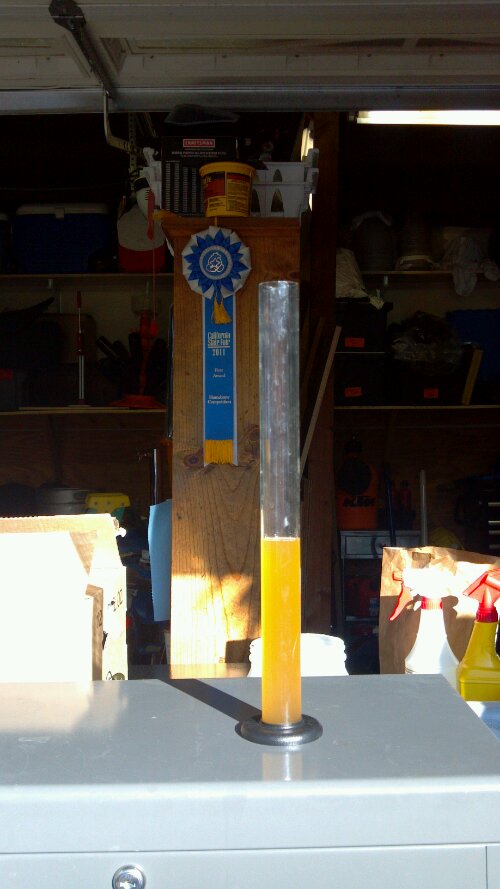
We brewed our final batch for the Oktoberfest party.
It was a very simple brew, no decoction, single hop addition, ale yeast.
We are using two different yeasts: WLP 300 Hefeweizen and WLP 400 Belgian Wit. Should be fun to compare the two.
We brewed our final batch for the Oktoberfest party.
It was a very simple brew, no decoction, single hop addition, ale yeast.
We are using two different yeasts: WLP 300 Hefeweizen and WLP 400 Belgian Wit. Should be fun to compare the two.


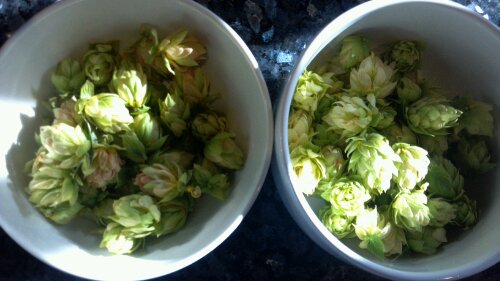

We are brewing an IPA using home grown hops. Lots of hops.
Home grown Magnum, Chinook, Cascade, Mt Hood, and Perle are featured. We are also using some commercial Columbus and Amarillo.
Yeast selections are Safale 005 for 5 gallons and WLP041 for the other 5.
Also getting its first workout is our Blichmann Hop Rocket. We are going to use it as a “hop-back” to push our wort through between boil kettle and chiller.
Couple of challenges:
1) A leaking boil kettle valve that forced us to empty the nearly full BK into our HLT to fix.
2) Another boil-over.
We also racked our Oktoberfest into secondary for some lagering at 40°…
One keg of our latest saison is going on the gas to get ready for the long weekend.
Not bad for a Friday night.

We received a package with a pleasant surprise, a HUGE blue ribbon from our Dunkelweiss victory.
We also got a blue pint glass etched and gold painted “First Place” and logo on its face.
We want to win more!
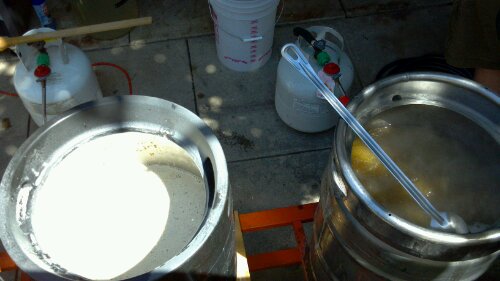

Double batch day.
Our Kolsch has a really strong chlorophenolic (band-aid) flavor. This not only is disappointing, but put us behind in our Oktoberfest party promise.
We decided to seek both catch-up and redemption. We will brew both an Oktoberfest and re-brew our failed Saison.
First through the brewery was the saiaon. We did not dial up the malt this time and we are using a crop of yeast from Jeremy at Eagle Rock Brewery.
We are adding a pound of wheat and a pound of candi sugar to our Oktoberfest as a whim.
We are brewing a Kolsch. We have wanted to do one for a long time. We had a great unfiltered example at Gordon Biersch in San Diego and it felt like the right time to finally get it going.
Lots of new stuff being used for the first time:
1) Temperature controlled yeast starter.
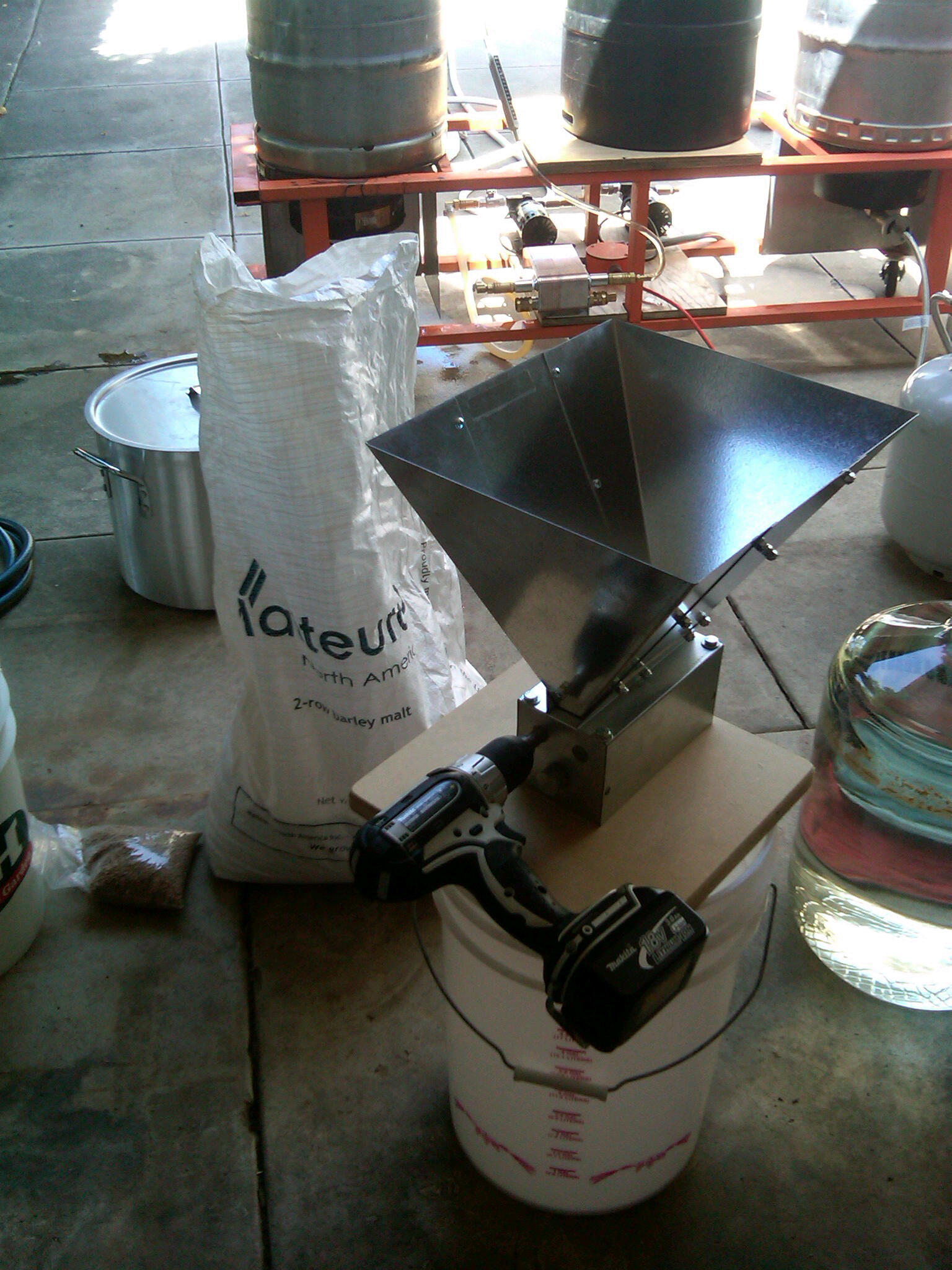
2) Grain mill (Monster Mill 3 roller)
3) Oxygen stone.
4) 5.2 pH stabilizer
Add the above to our first decoction (this one is a double decoction but we missed temp on the second so call it a 2.5 decoction) and we really have our hands full.
We also purchased six new kegs. Four are 5 gallon and two are 3 gallon size. The guy at the shop told us that they belonged to Emilio Estavez but he had too many and sold these back to the store. We just want to party with his brother.
In six weeks, or so, we shall know if we took on too many changes to get this beer right.

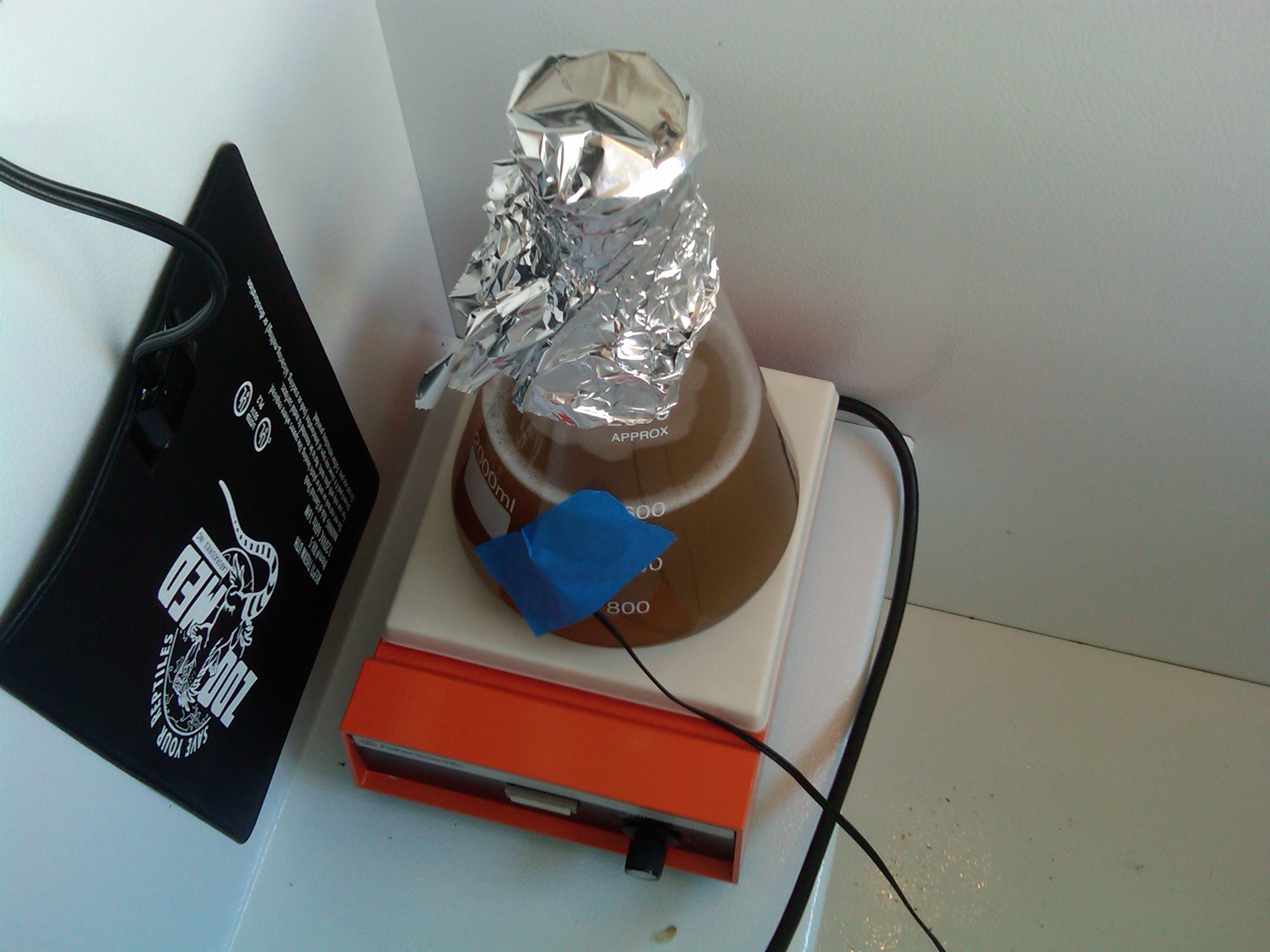
We got back from the AHA’s National Homebrewers Conference.
It was fun and informative. We learned a bunch, drank LOTS of beer and met many interesting people.
The seminar sessions were hugely informative. The Pro Brewers and Club Night events were fun. The Banquet was tasty and great to meet new people. The Hospitality Suite was serving good homebrew and had vendor tents with lots of good products on display.
Highlights of extra-conference frolics included great curry mussels, excellent beer and a tour of the Stone Brewery, an inside tour of a Rock Bottom Brewery, excellent hot wings and craft beer at Regal Beagle, meeting the brewer and getting an unfiltered Kolsh straight from the brite tank at Gordon Biersch.
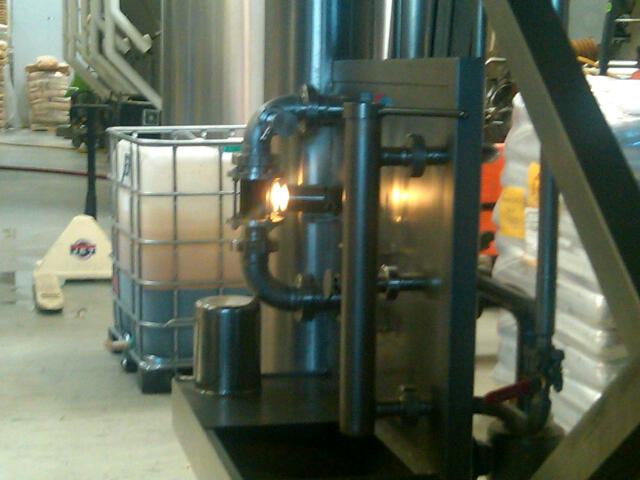
Stone Anniversary Lauter
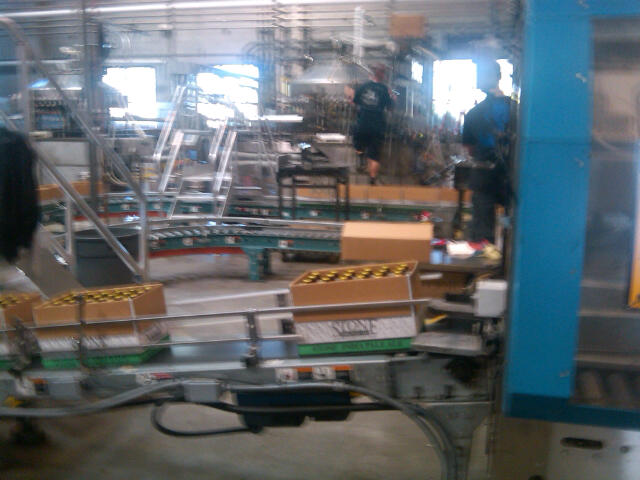
Stone Bottling Line

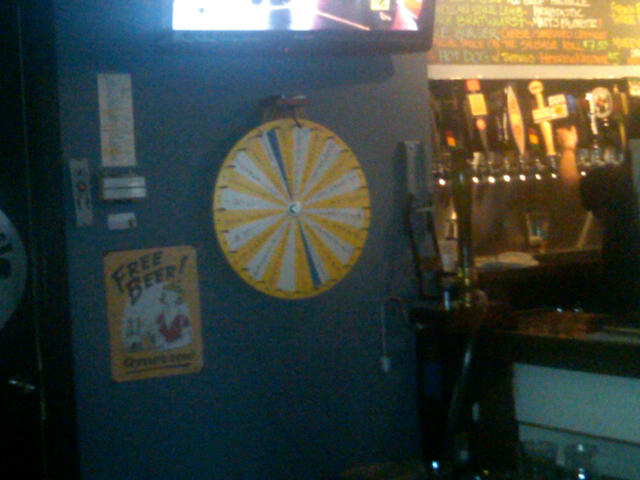
Regal Begal Beer Spin

Waiting for Pro Night Doors to Open

Rock Bottom Tanks
Club Night Creepiness

Banquet
Inspired by Sierra Nevada Brewing’s Beer Camp #8 California Common, we decided to brew a similar beer.
There was no recipe to be found so we worked off what we could find. We started with an Anchor clone recipe (from an ancient BYO magazine). We knew the ABV of the camp beer was 6.5% so we upped the grain bill by 4.5 pounds and the hops by a half ounce (30 min) to balance.
Should be a fun beer to drink.


Our Saisons are not finishing. We are stuck at 10 brix. We pitched some champagne yeast and have put the fermenters in the chamber at 25C to try to get the beer finished.
Hopefully the new yeast does its job. Even if we don’t get our desired super dry finish, it still tastes pretty good so we will keg and gas it and drink away.

We received the pictured certificates today from the AHA.
Bohemian Pilsner: 26 – Bronze
Dunkelweizen 33 – Silver
Fruit Beer 24 – no prize
German Pils 30.5 – Silver
American Brown 30 -Silver
Unfortunately, no score sheets enclosed. Perhaps they are coming under separate cover.

We racked the IPA into a secondary fermenter.
Unfortunately, our 5th and 6th carboys are only 5 gallons. The primaries are 6 gallons. We were forced to dump a good amount of beer in the transfer.
We added our dry hop (Amarillo) to the secondary and racked on top of it.
Our Saison was not fermenting as fast as we would like so we moved it to the fermenting chamber (freezer) and turned it up to 23C (75F) which should be more friendly to the specific yeast we are using.
The little snake tank heater should get a workout.


 Los Angeles Brewers