Our National Homebrewers Competition awards arrived. Four Bronze, one Silver and one Gold. The silver (Pilsner) and gold (Kolsch) move on to the final round.

We need to ship bottles to Seattle this week for the final round.
Our National Homebrewers Competition awards arrived. Four Bronze, one Silver and one Gold. The silver (Pilsner) and gold (Kolsch) move on to the final round.
We need to ship bottles to Seattle this week for the final round.
We have wanted to do a Berliner Weiss for a while. Today is the day.

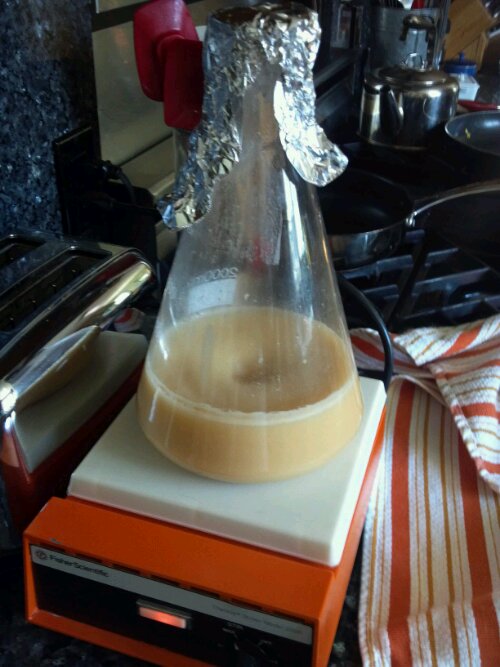
Our yeast is a bit on the old side. One vial of WLP 630 expires in October and the other this month. A yeast starter was in order.
We also replaced our silicone hoses. They were still in pretty good shape after two years and many batches.
We missed our 149° mash in temp by 1 degree so we did a mini decoction of one quart an hour into the 90 minute mash to achieve and maintain the correct temperature.

Otherwise, the brew session went well and the yeast was chugging along within 18 hours.
We brewed a very big barleywine. We used more than 41 lbs of grain.

Our mashtun was only barely able to do the job.

We used only 1qt of water per lb and our efficiency was low (65%).
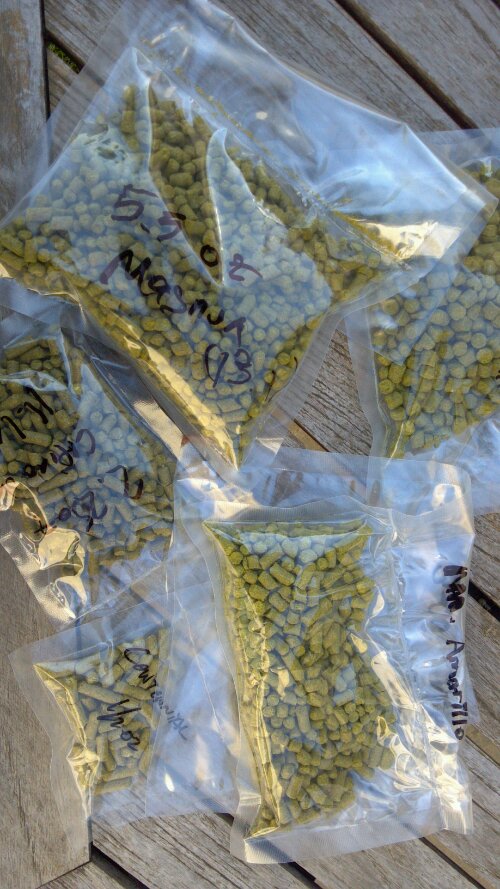
We used a pound of hops, with a couple ounces of whole hops in our hop rocket.
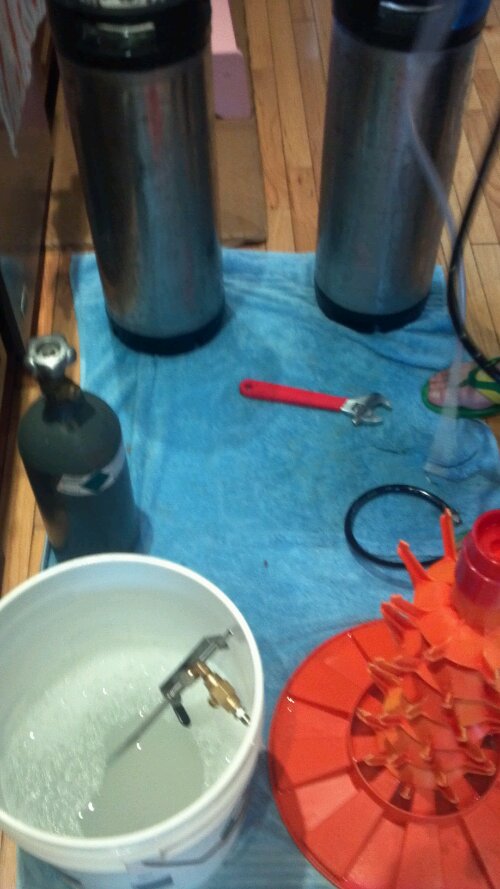
We managed to crossthread the clamp on the hop rocket while taking it apart. Bummer.
The final gravity was a bit under our hoped for 1.114 but we did hit 1.100. We pitched directly on to our XPA yeast cakes.
We have lots of ideas for this beer, including oak aging and souring a portion. For now, we let our yeast do its thing.
We are making a 10 gallon starter for our upcoming barleywine in the form of an extra pale ale.
Extract was super efficient and we ended up adding a gallon and 3/4 and still 7 points over our target.
Our plan is to rack our barleywine over the XPA yeast cake.
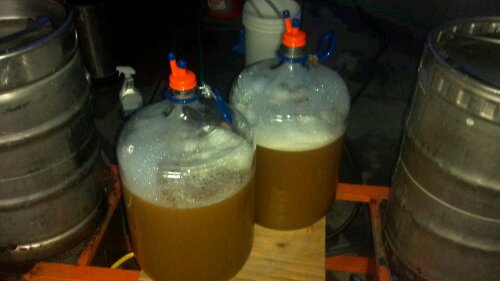
We also enjoyed a few flights of our 6 beers on tap.

We bottled six beers for three competitions.

We bottled the Double IPA, Kolsch, Pilsner, English Black Mild, Dunkelweizen, and the Gose.
The upcoming competitions are the AHA’s National Homebrewers Competition , the Maltose Falcons’ Mayfaire Competition and the California State Fair’s Homebrew Competition.
Next task is to pack and ship our beers to San Diego for the NHC.
Win!
We were both able to take a day off from the real world and crank out two beers.
The first is a Gose. An historical style, we tried a bottle and decided to go for it. Brewed in Leipzig for a couple of centuries, it has coriander and salt added. The salt is to replicate the brewing waters of Golsar where the style originated. We used aciduated malt to sour the beer as well, as we want to enter it in the NHC at the end of the month.
The acidulated malt forced us to do a two stage mash. One hour without the acidulated and then 45 minutes with it. We had to decoct about two gallons to bring the temp back up after adding the acidulated malt. Very long brewing session.
We also used our new sparge arm for the first time on this batch.

Our second batch was a problem as we way undershot our gravity. It was a dunkelweiss that should have come in at 1.050 and barely hit 1.040. We lost a bit of our first runnings due to an inadvertently open boil kettle valve. We also may have missed our mash temp on the high side and sparged too quickly.
The recipe is very close to our blue ribbon winning dunkelweiss from last year’s California State Fair.
Both beers took off in the fermenters, with the dunkelweiss literally blowing its top, thanks to temperature in the 80’s.
Today’s brew is a double IPA. 10 gallons of beer made with 31.5 pounds of grain.

The mash tun is full.

We are using 7 ounces of kettle hops and another six (or more) ounces for hopback and dry hop.
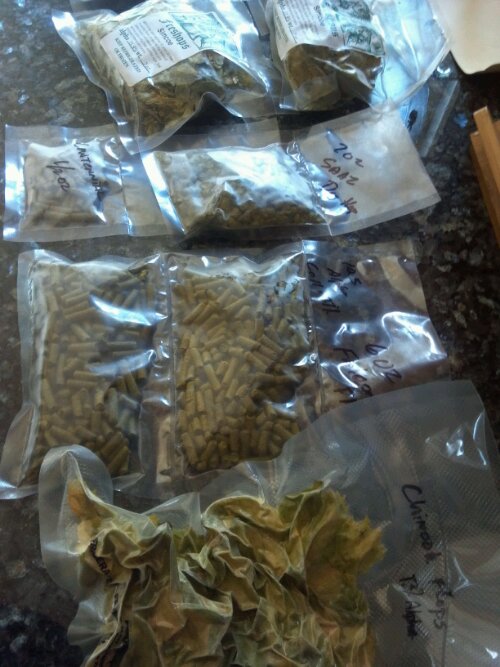
Boil-over was a problem again. Lesson learned: add hops slowly.
Again, burners have made the day shorter but the power must be respected (see: boil-over). 10:00am mash-in and 1:45pm boil start are the result.

We are giving the Kolsch style another run. Our last attempt yielded a good beer except for the overwhelming flavor of band aids. Yes, chlorophenolic hell.
It was so bad that we dumped the entire batch. Not fun.
This time was not without drama as we had super efficiency (initial measurement is close to 90%), a yeast that does not want to start and yet another boilover.
Solutions:
The boilover was before the hop addition (low alpha Hallertau) so we did not lose any bittering. We now have a spray bottle full of water on hand to stop this from repeating.
The efficiency leaves us with a beer that had an OF of 1.060 when we were shooting for 1.048. We will add some water to thin it out before we pitch.
The yeast problem will resolve itself, hopefully, as the starter has been going for only 22 hours. If not, we buy 4 more yeast units and pitch straight from the vials.
The wort tasted fantastic. Hoping this one works.

We also spent some time kegging the blonds we brewed last time. They had a very vigorous fermentation.
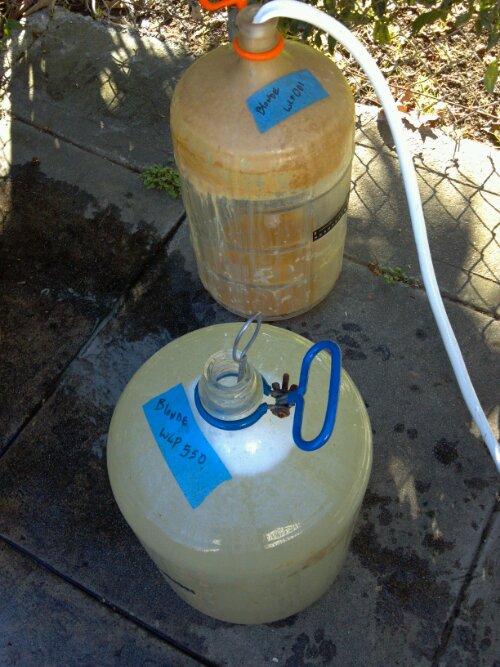
We also spent some of the 90 minute mash and 90 minute boil cleaning kegs and our big fridge. Strange to see it empty.

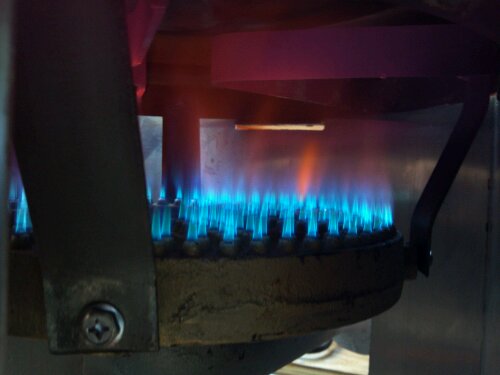


We are brewing another batch of blond. Our first was one of our favorites. Our second was not as good as the first.
Half California 001 and half Belgian 550 yeast.
We also swapped our low pressure regulator with a high pressure regulator. With the new burners we are able to raise 12 gallons by two degrees per minute. Woo hoo!
Just so you know, home brewing is full of fun and promises. We promised to deliver 40 gallons of beer to a party, and that happened. A friend needed a keg for his birthday, no problem, let us look in the back. A special 40th Birthday Wit needs to be made, we’re on it. Family calls, we are men of action.
The latest action comes in the form of a football game. A father in law wanted to show some friends his son in law’s hobby and we are happy to help. With burnout set in from a very busy summer behind the burners, we set out to shorten our brew day a bit, and try some extract brewing. We have not brewed with any extract for over two years and for some reason, were a bit hesitant to do so again. The shortened days and cramped calendars took over and it was time to try extract/ steeping grains again.
A citra pale ale was our target. We started with Jamil’s great book “Brewing Classic Styles” extract and steeping grains recipe and traded all the hops in on some Citra hops.
The brew day started well, then the problems snuck up on us. We filled the boil kettle a bit too high, still thinking that we were sparging. We swear it looked right. When it came time to dump in the extract, well the kettle almost overflowed. Remember the displacement factor? Nope, not today. Problem two: Our kettle is set up with a false bottom to help with straining hops. Well, some extract got under the screen away from the stirring spoon and burnt to a crisp. We are still scrubbing the kettle clean. On the positive side, we tasted a sample tonight and you can sort of tell. There is a bit of roast/burnt carmel in the flavor, but not too much.
We dry hopped and took a gravity reading tonight. The O.G. was 1.062, a bit higher than we wanted, and now after 1 week of WLP 001 doing it’s thing we are down to 1.028. Still some more work to be done.


 Los Angeles Brewers