Skip navigation

Our low reading mash tun dial thermometer tested accurate within 3 or so degrees of a couple of control thermos.

I am now thinking something in our mash tun setup is causing a poor reading. Maybe our sight glass setup is to blame, or the level at which we are mounting it. Either way, we need a better set-up.

The best performing thermo I have is the Taylor digital. I bought two, and one arrived with a dead battery and the other got wet internally despite its waterproof claim.

I cleaned them out and replaced their batteries. They both seem to work and are within a half a degree of each other at room temp. Best of all, they can be calibrated.

I hope to fashion some type of extra waterproofing for them. Perhaps I will wrap it in saran wrap. I thought of sugru but it is not food safe.

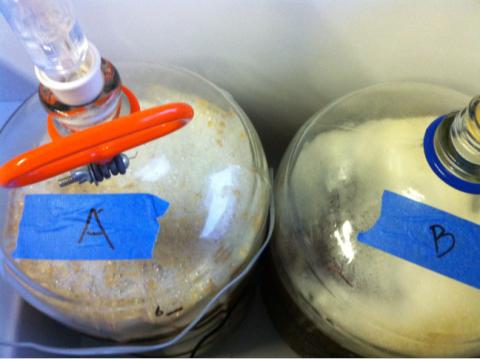
Well, perhaps we were too hasty in making a judgment about the Belgian yeast. It worked! Well, started anyway. Fingers crossed.

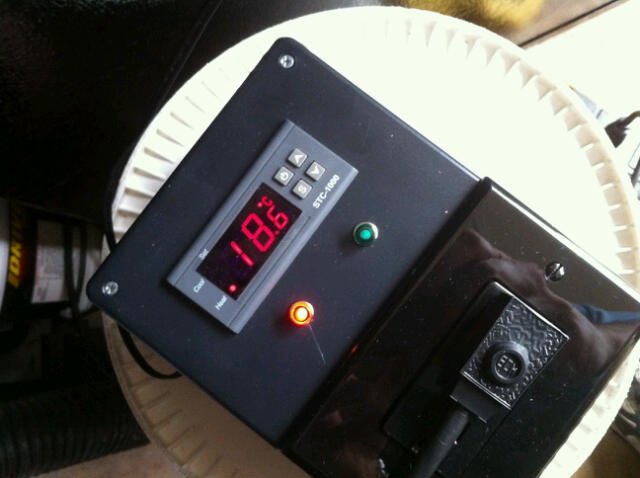
The temp controller is working well too. Now within 0.2 degrees C of target.

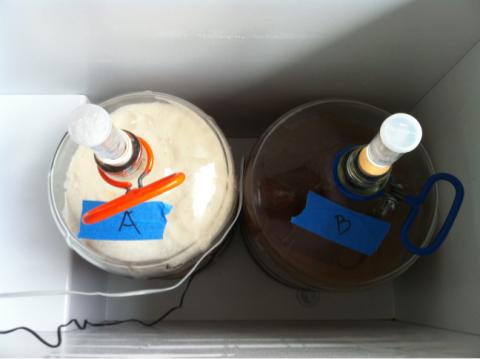
After 18 hours, our American Ale yeast is going strong. The Belgian, not so much. We pitched two vials of White Labs to boot. Hoping it is just a slow start.

The temp controller is working but reading a bit low. Overshot by almost a full degree as it brought the temps down for the first time. At the lower temp, the “heat” lamp is lit. If we had a heating element, we could have a closer temp.

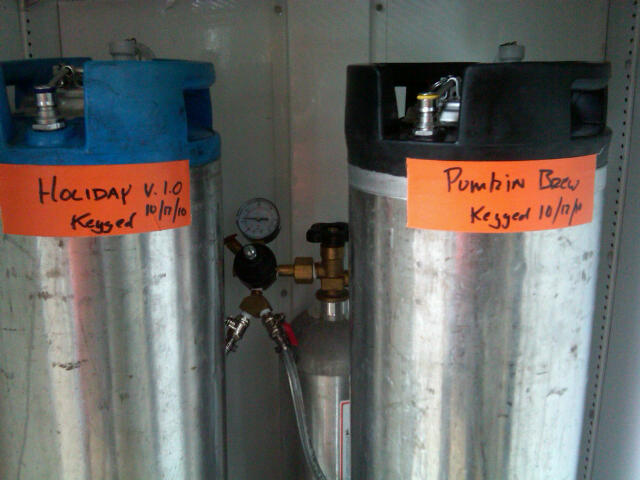
We kegged our two seasonal beers. They are both pretty weak. Too thin due to our poor efficiencies. If they don’t work we should have enough time to crank one out for Christmas. Gassing to 2.5 volumes or 12psi at 40 degrees.

Today we brewed 10 gallons of Blonde Ale, somewhat duplicating one of our best beers yet.

We pitched an American Ale yeast on one half. We used a dry yeast for the first time. The other half is fermenting with a Belgian Ale yeast.

Me missed our mashing temperature again. This time by only two degrees. We did a small decoction to bring the temp back up and mashed for an extra 15 minutes. I think our efficiency was better than 70% (according to Beer Tools Pro).

All went well, except a small miscalculation had us using half the hops called for in the recipe. We may dry hop to bring up the hop flavor or we may just leave it. We will figure it out after we taste it before kegging.

We brewed two seasonal ales, a Christmas and a Pumpkin. Our brew day began at 5:00pm on a Friday and ended at 2:00am on Saturday morning. The long hours, late night and a few beers each conspired to mess us up.

We missed our mash temps by a lot. Our thermometers were all wrong, the pumpkin absorbing heat and a lack of attention all added up to less than 50% efficiency on one of the beers and less than 60% on the other.

Lots of lessons learned.

We had no real way to regulate the temperature on our new display refrigerator. The internal thermostat keeps the temperature at 39 degrees F no matter how you set the dial.

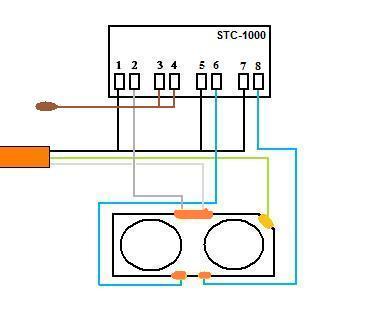
This controller will allow us to dial in the temperature to within 1 degree Celsius. We have ordered a controller that will control heat as well as cooling. When that one arrives, we will put it into this enclosure and move the current, cool only, controller to the kegerator.
We will add some kind of element to warm the fridge for those very few nights when the ambient temperature might bring the fridge temp to below our target. This is probably overkill, but temperature control is vital to good fermentation. Lagering is something we want to get good at too.

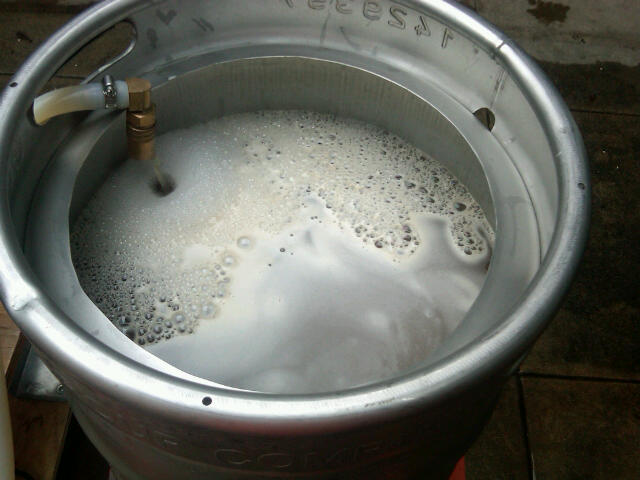
We kegged the Blonde Ale (no pictures, sorry).

SG: 1.101 or alcohol of 6.02%. A bit out of style. Color and flavor are spot on, however. Will be really good when properly cold and carbonated.

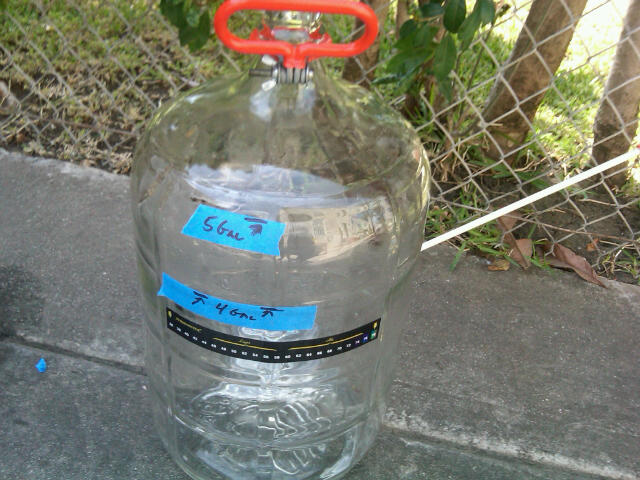
We also measured and marked the carboys. We have been over filling the big ones and under filling the small. We have two 5 gals, one 6.5 gal, and one 7.5 gal. We also have another 6.5 gal that cracked. Funny how no two are the same.

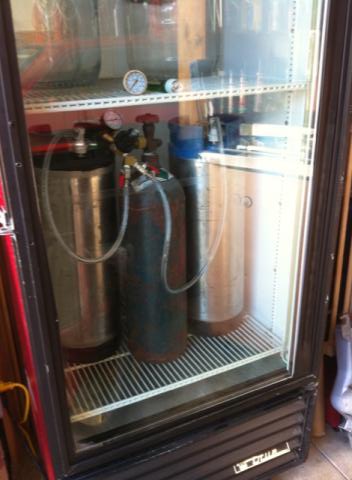
Fridge now has 20 gallons in kegs. Actually ~18 as we have been sampling the SNPA clone.

The first resident of our new fridge is our two week old Sierra Nevada Pale Ale Clone (I think we need to come up with a better name for it).

We are dialing in the temperature and hope to get good results. We have other ideas for temperature control, but we may luck out with the stock thermostat.

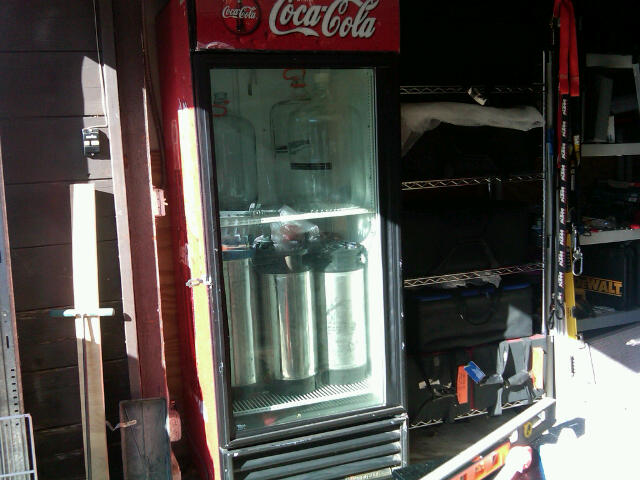
We found this display merchandiser on Craigs list. Good price and in better than fair condition.

We can fit twelve Cornileus kegs or eight carboy fermenters.

Overkill? It will make for a great lagering chamber that we can serve from as well.

All we need now is a controller to dial in temperature as this unit is optimized for 34 to 38 degrees.